AI shopping is making product data quality harder to ignore.
OpenAI's merchant page now asks retailers to share product feeds so ChatGPT can support product discovery, comparison, and merchant-owned checkout experiences. OpenAI's shopping research documentation also describes a discovery process that may use merchant product data, public product information, and other retail sources to compare products by attributes such as price, features, reviews, and constraints.
For ecommerce teams, this is not a reason to chase a new shortcut. It is a reason to fix the product data stack.
If your product pages say one thing, your feed says another, your schema is incomplete, your images are blocked, and your variants are inconsistent, AI shopping surfaces will not magically interpret the catalog the way your merchandising team intended. The same issues that hurt Google Shopping, organic product visibility, comparison pages, and paid landing pages can also weaken AI shopping readiness.
This workflow is for ecommerce founders, marketers, SEOs, developers, and operators who want product data that is accurate, crawlable, comparable, and safe to expose.
What Changed
OpenAI's merchant guidance emphasizes product feeds, product discovery, and merchant-owned checkout. It also states that feeds give merchants more control over how products appear and help keep information accurate and up to date. Shopping research in ChatGPT is designed for comparison-heavy decisions and can produce side-by-side comparisons, top picks, tradeoffs, and links to merchants.
That makes product information structure more important.
The practical question is not "how do we rank in ChatGPT shopping?" There is no responsible way to promise that. The practical question is:
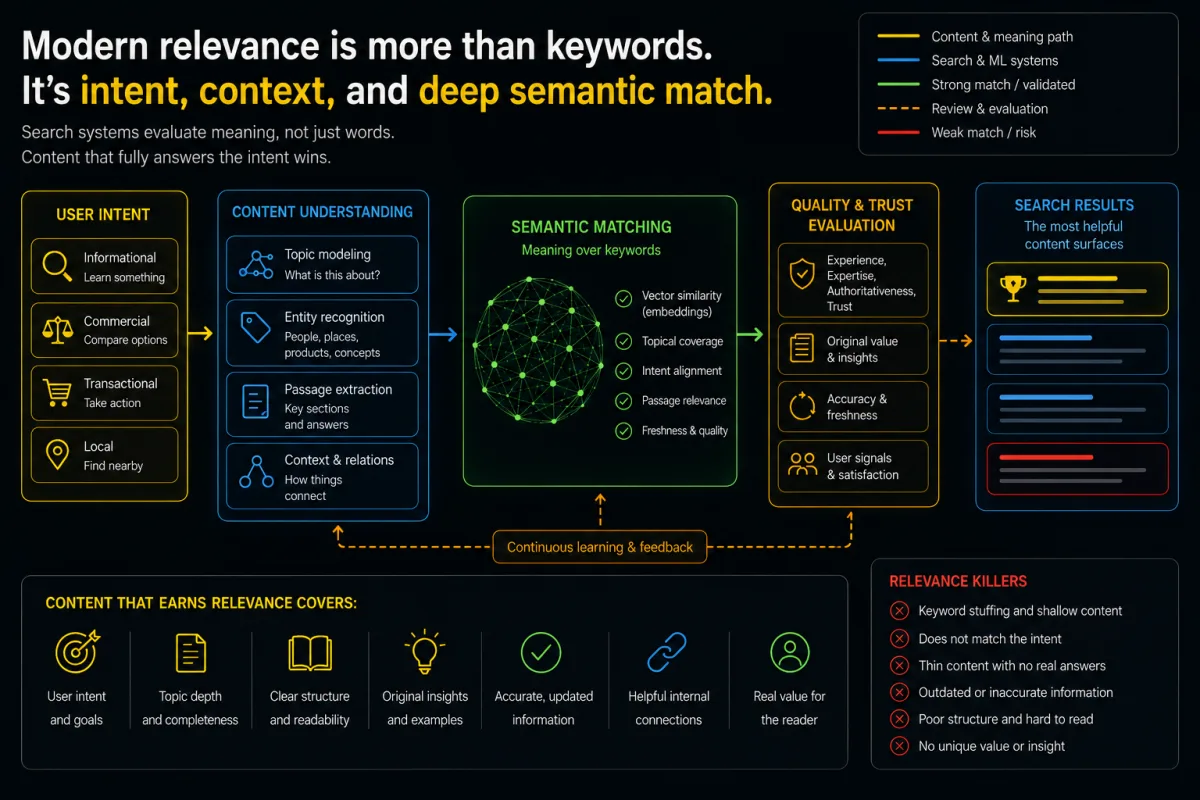
If an AI shopping system, search crawler, ads validator, or human evaluator reads our product data, will it find the same accurate facts everywhere?
Most ecommerce sites cannot answer yes without an audit.
What Product Feed Readiness Does Not Mean
Product feed readiness does not mean submitting a spreadsheet and waiting for AI traffic.
It also does not mean:
- rewriting product descriptions with generic AI copy;
- stuffing product pages with comparison keywords;
- creating fake reviews or synthetic testimonials;
- hiding bad availability behind feed tricks;
- submitting products before prices, variants, and shipping rules are stable;
- treating ChatGPT, Google Merchant Center, organic SEO, and paid landing pages as separate worlds.
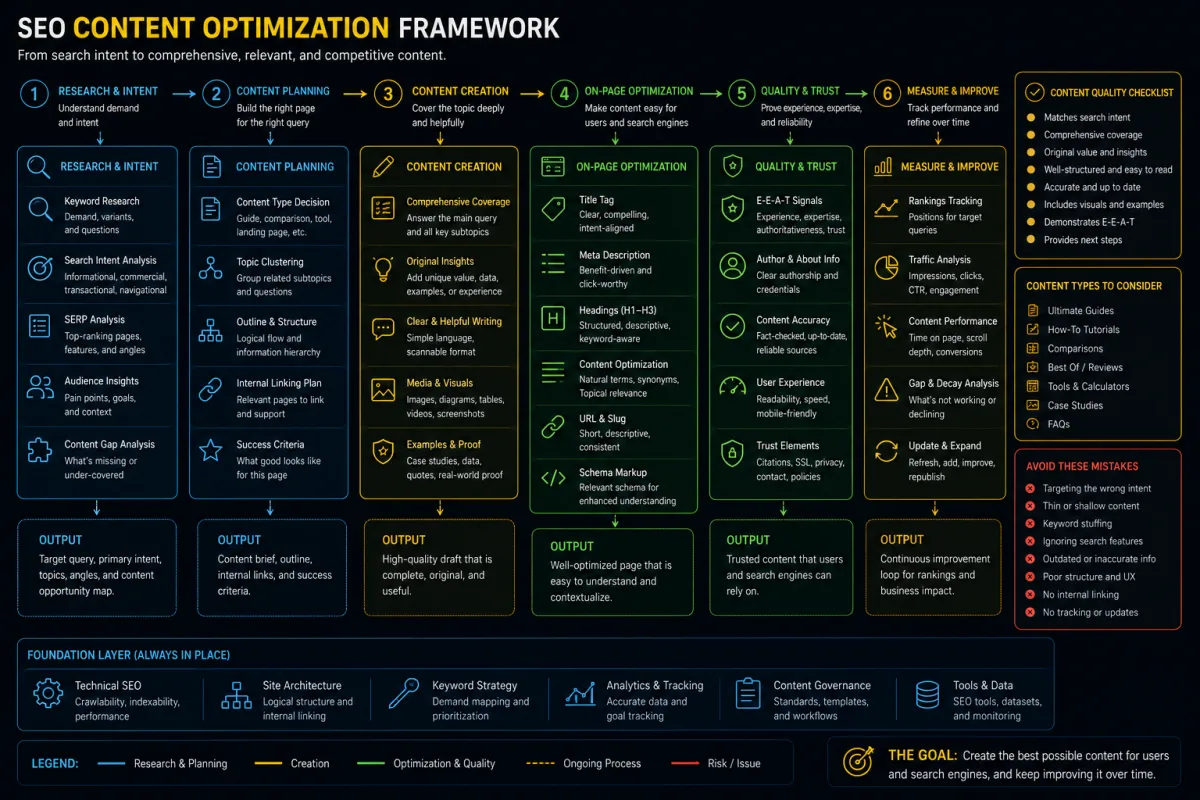
Good product feed readiness is boring in the best way. It means the product truth source, product page, feed, schema, images, reviews, variants, policies, checkout path, and measurement plan all tell the same story.
The ChatGPT Product Readiness Workflow
1. Define the product truth source
Start with ownership. Where does the real product record live?
For some shops, the source of truth is Shopify, WooCommerce, Magento, a PIM, an ERP, a custom database, or a marketplace connector. For others, the answer is unclear because product titles, descriptions, images, prices, and variants are patched manually across multiple tools.
Document the truth source for:
- product ID or SKU;
- product title;
- brand;
- category;
- description;
- price;
- sale price;
- currency;
- availability;
- size, color, material, and other variants;
- GTIN, MPN, or other identifiers;
- image URLs;
- shipping and return policy;
- regional availability;
- review data, if eligible and authentic.
If the team cannot identify the source of truth, do not start with AI shopping submission. Start with product data governance.
2. Align product pages, feeds, and structured data
The most common ecommerce data problem is mismatch.
A product page says the item is in stock. The feed says out of stock. Product schema is missing the sale price. The image in the feed is old. A variant page has a different title from the canonical product group. The checkout page rejects a region that the product page appears to support.
Google Merchant Center's product data specification warns that inaccurate, missing, or conflicting product information can cause disapprovals, limited eligibility, incorrect displays, or other product issues. Google's ecommerce structured data guidance recommends relevant structured data types such as Product, ProductGroup, BreadcrumbList, Organization, LocalBusiness, Review, and VideoObject where appropriate.
Use those principles for AI shopping readiness too:
- product page visible content should match the feed;
- schema should match visible content;
- image URLs should resolve and be crawlable;
- variants should be represented consistently;
- availability and price should update quickly;
- regional rules should not contradict page copy;
- canonical URLs should point to the intended product or product group.
This is where technical SEO, feed management, and merchandising need to work together.
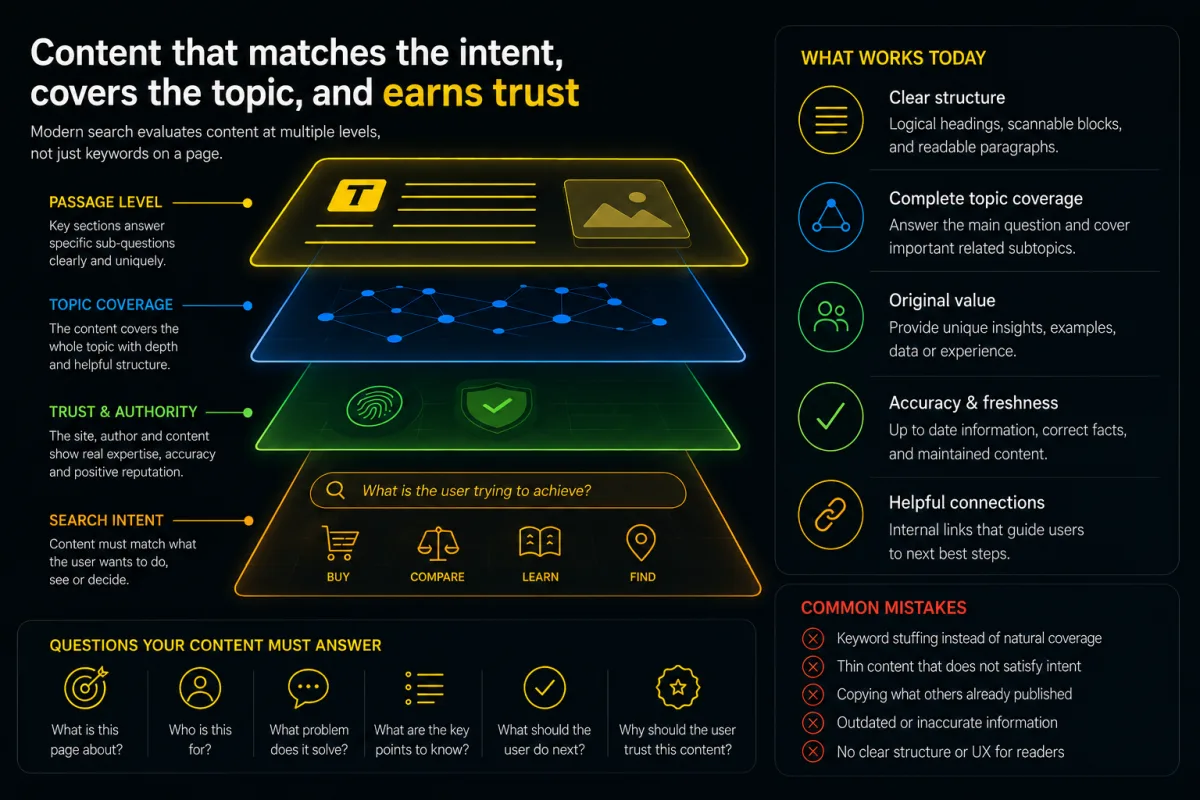
3. Make product pages useful for comparison tasks
Shopping research is built around comparison, tradeoffs, constraints, and buyer guides. Product pages that only contain thin marketing copy are weaker for this use case.
Add information that helps a person compare:
- who the product is for;
- who it is not for;
- key specifications;
- materials or ingredients;
- size and fit notes;
- compatibility;
- warranty;
- return policy summary;
- shipping constraints;
- care instructions;
- use cases;
- limitations;
- differences between variants;
- comparison against the previous model, bundle, or similar product.
This does not mean writing a giant page for every SKU. It means making the important attributes explicit enough that a buyer, search engine, feed processor, or AI shopping system does not have to guess.
For example, a furniture store should not only say "premium office chair." It should expose seat height, weight capacity, material, warranty, delivery region, assembly requirements, and who it suits. A skincare brand should expose skin type, active ingredients, concentration where appropriate, contraindications, and routine placement. A B2B equipment seller should expose compatibility, technical specs, lead time, support terms, and replacement part availability.
4. Treat images, reviews, and variants as product data
Images are not just decoration. Google image guidance stresses high-quality images and performance-friendly image delivery. For product discovery, images also help shoppers understand color, scale, packaging, texture, variant differences, and use context.
Audit image data:
- main image matches the correct product and variant;
- image URLs are crawlable;
- images are not blocked by robots.txt or hotlink protection;
- filenames and alt text are descriptive;
- dimensions are large enough for previews;
- image compression does not destroy detail;
- variant images map to the right variant;
- lifestyle images do not replace required clean product images;
- generated or edited images are not misleading.
Review data also needs care. Do not fabricate reviews or pull review snippets into markup if they are not visible, eligible, and policy-compliant. If reviews are used, keep the source, count, rating, and moderation process clean.
Variant logic is often the hardest part. ProductGroup structured data, item group IDs, canonicalization, and page templates must agree on what counts as the product and what counts as a variant. If color, size, region, bundle, or subscription options are handled inconsistently, feed and page matching becomes brittle.
5. Audit crawler and agent access
Product readiness fails if the product data cannot be reached.
Check:
- robots.txt rules for product, category, image, and feed paths;
- CDN and WAF bot rules;
- OpenAI crawler access where relevant;
- Googlebot and Google Merchant Center access;
- image hotlink protection;
- JavaScript rendering of critical product facts;
- API responses used by product pages;
- blocked resources that make pages hard to understand;
- rate limits that accidentally block crawlers;
- regional redirects or popups that hide product content.
OpenAI's crawler documentation separates OAI-SearchBot, GPTBot, OAI-AdsBot, and ChatGPT-User. That distinction matters. You may choose to allow search discovery but not training crawling. You may allow public product pages but still protect checkout and account pages.
Never use robots.txt as the only protection for private data. Checkout, account, order, admin, and staging surfaces need real access controls.
6. Check checkout, policies, and regional availability
OpenAI's merchant page currently emphasizes merchant-owned checkout. That means the product discovery journey may still end on your site or app. If your checkout is broken, slow, regionally confusing, or inconsistent with page copy, feed readiness will not save the conversion.
Review:
- checkout availability by country and region;
- shipping costs and delivery estimates;
- tax and duty clarity;
- return and warranty pages;
- out-of-stock behavior;
- cart persistence;
- payment methods;
- mobile checkout performance;
- cookie banners and interstitials;
- blocked or fragile checkout paths for assisted browsing.
This is where SEO meets operations. The best product page in the world cannot compensate for a checkout path that contradicts the product information or blocks real buyers.
7. Measure without inventing AI shopping metrics
Measurement is still immature.
Do not invent a dashboard that claims exact ChatGPT shopping ranking or revenue if the data source does not support it. Instead, build a practical measurement layer:
- crawl access logs by user agent;
- product feed diagnostics;
- Merchant Center disapprovals and warnings;
- organic product page clicks and impressions;
- paid landing page quality signals;
- product page conversion rate;
- checkout error rate;
- price and availability mismatch reports;
- image error reports;
- structured data validation;
- server logs for blocked useful crawlers.
If AI shopping referrals appear in analytics, label them carefully and explain attribution limits. If they do not appear, the readiness work is still useful because it improves the product data foundation used by organic SEO, paid shopping, marketplace feeds, comparison pages, and internal merchandising.
Example: A 30-Day Product Feed Readiness Sprint
Here is a practical sprint for a mid-sized ecommerce catalog.
Week 1: inventory and baseline.
- Export product URLs, feed rows, schema samples, image URLs, and top organic product pages.
- Identify the product truth source.
- Group products by template, category, variant complexity, and revenue importance.
- Pull feed diagnostics and crawl errors.
Week 2: mismatch audit.
- Compare page content, feed fields, and Product/ProductGroup schema.
- Flag price, availability, variant, image, canonical, and regional mismatches.
- Review product images and blocked resources.
- Check robots.txt, WAF, CDN, and crawler logs.
Week 3: fixes and governance.
- Fix template-level schema gaps.
- Fix feed mappings.
- Correct variant grouping.
- Improve product page comparison attributes.
- Document owner and update frequency for each product field.
Week 4: validation and monitoring.
- Re-crawl sample product groups.
- Validate structured data.
- Confirm feed diagnostics improved.
- Test public crawler access.
- Review checkout and policy pages.
- Create a recurring mismatch report.
The deliverable is not a generic AI shopping deck. It is a product data readiness file that a merchandiser, developer, SEO, and founder can all understand.
Risks and When Not to Submit Yet
Delay feed submission or expansion if:
- prices or stock are frequently wrong;
- variant grouping is broken;
- images do not match products;
- product pages are thin or misleading;
- schema contradicts visible content;
- regional availability is unclear;
- return, warranty, and shipping policies are missing;
- crawler access is blocked or unstable;
- checkout is unreliable;
- the team expects guaranteed AI visibility.
AI shopping systems can make mistakes, and product facts change quickly. Your responsibility is to reduce avoidable confusion, not to assume a feed will control every interpretation.
The Bottom Line
ChatGPT product feed readiness is not a new silo. It is ecommerce SEO, feed operations, technical SEO, image SEO, product schema, crawler access, and checkout quality in one workflow.
The winning move is to make product facts consistent across every surface that matters: page, feed, schema, image, variant, policy, and checkout. That work supports AI shopping discovery, but it also improves Google Shopping, organic product visibility, PPC landing pages, marketplace operations, and customer trust.
For Lemon SEO clients, this is a strong fit for ecommerce SEO, Amazon and marketplace strategy, AI Search/GEO, PPC, SEO-first web development, and marketing automation. The goal is not to chase an AI shopping hack. The goal is to make the product catalog understandable enough that humans and machines stop guessing.
For related product and marketplace execution, see the B2B Amazon and Google synergy case. Read the related case context.
Continue with product data readiness for AI Search and shopping ads, ChatGPT agent allowlisting, and Amazon and marketplace SEO.